
Are Rip Currents Dangerous?
Rip currents are not dangerous. Panic, fear, and unawareness are dangerous.
This is the most important thing Think Waves Lifesaving Organization wants every swimmer and beachgoer to understand: a rip current will not pull you underwater. It will not drag you to the bottom of the ocean. It will not hold you down.
A rip current moves horizontally — away from shore — and then weakens once it passes the breaking waves. The current itself is not what kills people. What kills people is what happens in the mind the moment they realize they are being carried away from shore.
The Smart Surfers Way teaches that the real danger of rip currents is panic — and panic can be removed with knowledge.
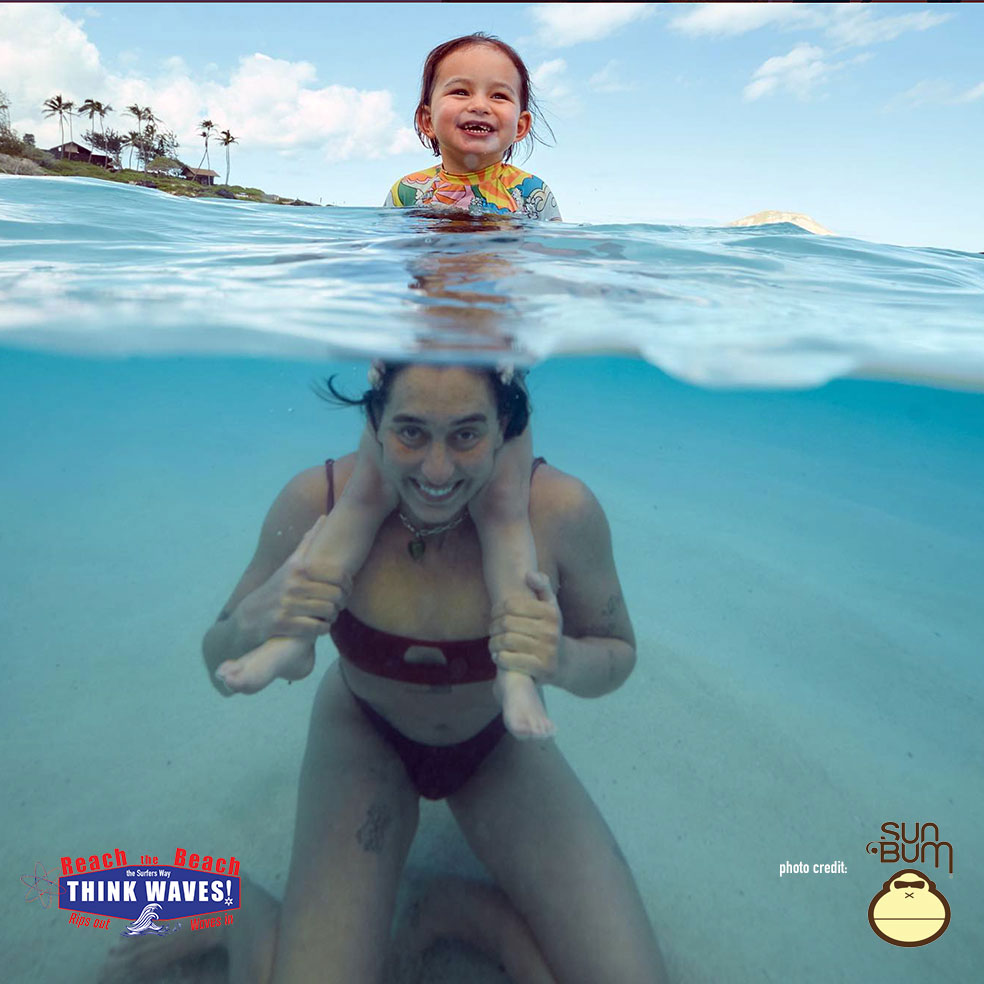
“Watch: Are rip currents dangerous? — Think Waves ocean safety video”
What actually happens when someone drowns in a rip current?
According to NOAA’s National Weather Service, drowning in a rip current follows a predictable pattern:
- A swimmer gets pulled offshore by the current
- They panic — instinct takes over, and they try to swim straight back to shore
- They swim directly against the current, making no progress
- Exhaustion sets in — most people cannot swim more than 50 yards before needing to rest
- Exhaustion leads to inability to stay afloat
- Drowning occurs
As rip current expert and NOAA meteorologist Erik Heden explains: rip currents can move faster than an Olympic swimmer. You cannot outswim them by going against them. The moment a swimmer tries to fight a rip current head-on, the outcome is almost always exhaustion — and exhaustion is what leads to tragedy.
Research published by the United States Lifesaving Association (USLA) confirms that rip currents cause over 80% of all lifeguard rescues at surf beaches and are responsible for more than 100 drowning deaths per year in the United States. But the current itself is not the killer — the panic response is.
Why do people panic in rip currents?
Most people have never been taught what a rip current actually does. They have heard the word, seen the warning signs, and felt the fear — but they do not know the facts. The dangers of rip currents come from not being informed.
The most dangerous myth about rip currents is that they pull swimmers underwater. This belief causes instant terror when someone feels the current pulling them offshore. That terror triggers panic. And panic is what costs lives.
A 2012 study published in Natural Hazards and Earth System Sciences found that being caught in a rip current triggers an immediate emotional response of panic, anxiety, nervousness, and fear in the majority of survivors — even those who had been warned about rip currents before entering the water.
Knowledge is the antidote. Being informed removes the dangers of rip currents. When a swimmer understands that the current will carry them offshore and then weaken — and that waves will bring them back to shore — the panic response has no foundation. Fear, caused by rip current myths, is replaced by a plan.
What do experienced surfers know that most swimmers don’t?
Experienced surfers have known the truth about rip currents for hundreds of years — and they use that knowledge every single day.
For a surfer, a rip current is not a threat. It is a tool. Surfers deliberately position themselves in rip currents to get a free, effortless ride out past the breaking waves. Instead of paddling hard against the surf to reach the lineup, they let the rip do the work. Once offshore, beyond the breaking waves, they catch a wave back to shore.
Rips take you out. Waves bring you back in.
This is the foundation of the Smart Surfers Way — the rip current survival technique taught by Think Waves Lifesaving Organization. A 2023 study from UNSW Sydney confirmed what experienced surfers have always known: surfers are significantly less likely to get into trouble in rip currents than non-surfers, precisely because they understand how currents behave and respond calmly rather than with panic.
The three most dangerous mistakes in a rip current
Understanding what NOT to do is just as important as knowing the right response. These are the three mistakes that turn a manageable situation into a life-threatening emergency:
1. Swimming straight back to shore against the current
This is the most common and most deadly mistake. Fighting the current head-on depletes energy at a rapid rate. Most people exhaust themselves within minutes and lose the ability to stay afloat. Never swim directly against a rip current.
2. Panicking and thrashing
Panic in rip currents burns energy and clouds judgment. It disrupts breathing, accelerates exhaustion, and prevents rational decision-making. The first and most critical step in any rip current survival situation is to force yourself to stay calm. Rip currents are not dangerous if you can avoid exhaustion that comes from panicking.
3. Attempting to rescue someone without a flotation device
NOAA data and NC State research show that approximately 27% of rip current drowning deaths involve bystanders who entered the water to help someone else. Never attempt a water rescue without a flotation device — a cooler, surfboard, or anything that floats. Throw it to the person in distress rather than swimming to them.
So are rip currents dangerous — yes or no?
The honest answer is: rip currents are dangerous for people who do not know what they are, what they do, and what to do when caught in one.
For someone with knowledge — a surfer, a swimmer trained in ocean safety, or anyone who has learned the Smart Surfers Way — rip currents are not dangerous. It is uncomfortable, it is disorienting, and it demands a calm response. But it is survivable.
The danger is not the water. The danger is ignorance and the panic that follows it.
This is exactly why Think Waves Lifesaving Organization exists — to replace ignorance with knowledge, and panic with a plan.
What to do if you are caught in a rip current
The Smart Surfers Way is the most intuitive rip current self-rescue technique in the world — and it has been used by experienced surfers for hundreds of years:
- Stay calm — the current will not pull you under
- Flow with the current — do not fight it, let it carry you offshore
- Swim toward the nearest breaking waves — waves carry natural energy toward shore and will help push you back to the beach
Do not swim parallel to the shore unless you can clearly see that doing so moves you out of the current. The safest and most intuitive escape is always toward the nearest breaking waves — where the ocean’s energy is already moving in your direction.
Think Waves is removing rip current fear worldwide
Think Waves Lifesaving Organization (TWLO) is a 501(c)3 nonprofit based in California. Our mission is to remove the danger, panic, and fear associated with rip currents and replace them with clear, accurate information and the knowledge to survive.
We work alongside the United States Lifesaving Association (USLA) and the National Oceanic and Atmospheric Administration (NOAA) to improve water safety worldwide.
The Smart Surfers Way is endorsed by Lifeguard Captain Mike Hutchinson as the world’s best intuitive rip current self-rescue technique. It is tried, true, and proven for hundreds of years. It replaces panic in rip currents with confidence.
Take our free quiz to test your rip current knowledge — and share it with anyone who goes to the beach so that they can be educated on the myth of dangers of rip currents.
Take the free Rip Current Quiz →
Support our mission — Donate today →
What is a rip current? →